
PAC-SALUT module · Urology
Bladder diary
Record and organise your urinary progress.
The Urology module is based on the bladder diary, also known as a voiding diary or frequency-volume chart: a record commonly used to document fluid intake, voiding, volumes, urgency episodes, leaks and the use of pads.

It is designed so that people can take an active part in their follow-up and arrive at their appointment with organised information, instead of having to rebuild weeks from memory.
What you can record
- IntakeThe fluids you drink, in millilitres.
- VoidingThe volume passed and, if needed, the degree of urgency.
- LeaksThe amount and type of pad. A value of 0 is also information.
- Leakage episodesWhen and how: coughing, walking, laughing, straining or with urgency.
- Awake or asleepEach entry shows whether you were awake or in bed, not whether it was day or night.
How it works
- 1
Record
Lets you record intake, voiding, leaks, leakage episodes and notes, placing each entry at the right day and time.
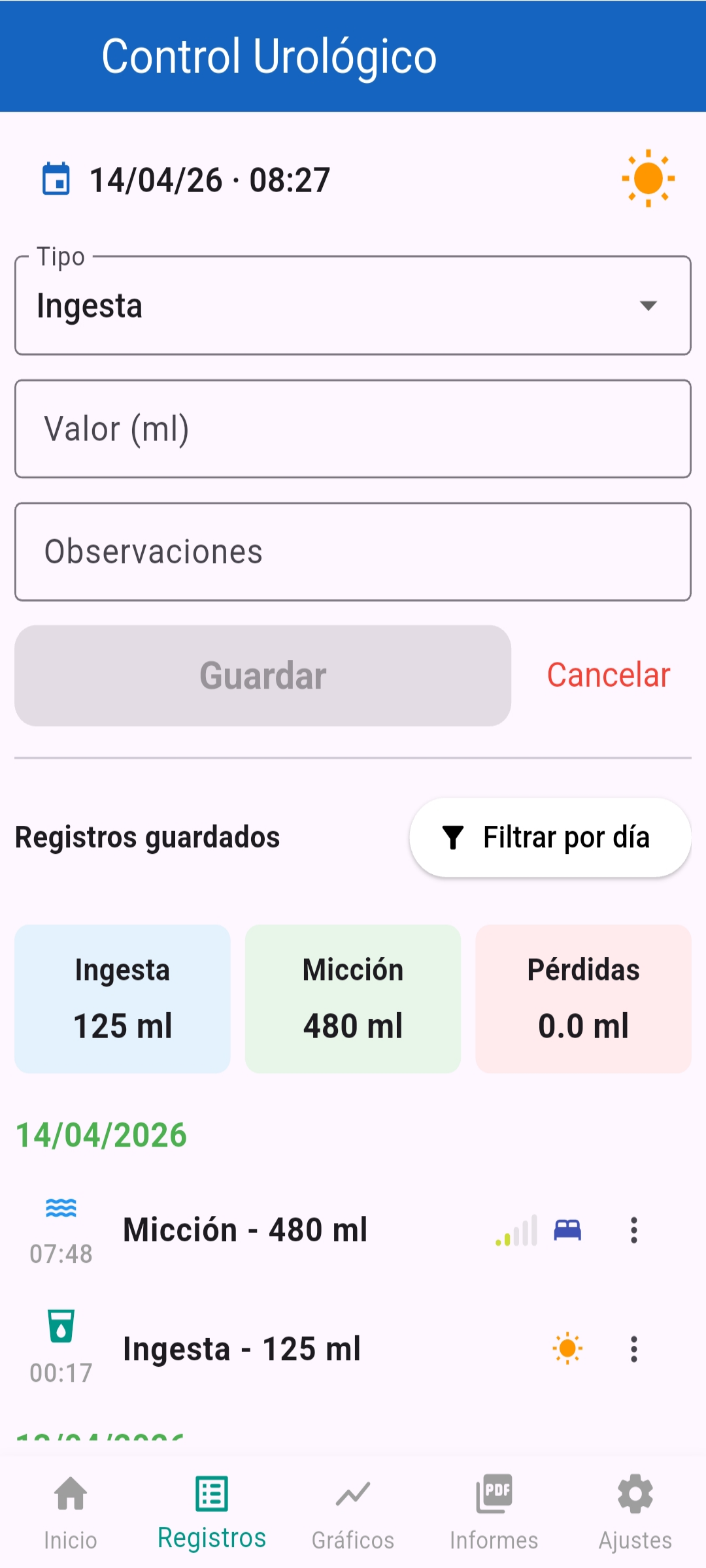
Entries ordered by date, time and type. - 2
See your progress
Organises the data by period and shows it in charts. This helps you see how volumes, frequencies and episodes evolve without rebuilding them from memory.
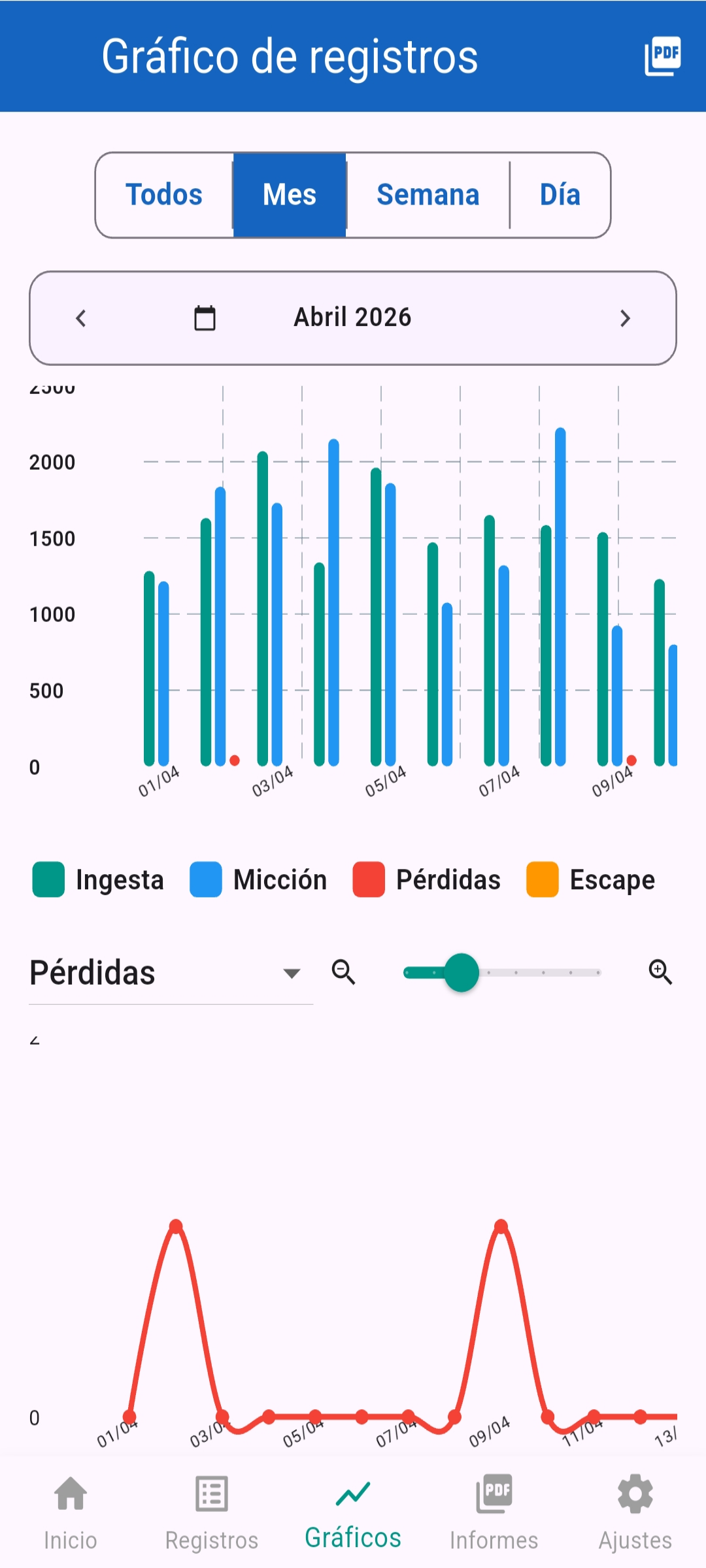
Visual progress by day, week or month. - 3
Share
Creates summaries and PDF reports that the person can review, print or share when they feel they may help prepare an appointment.
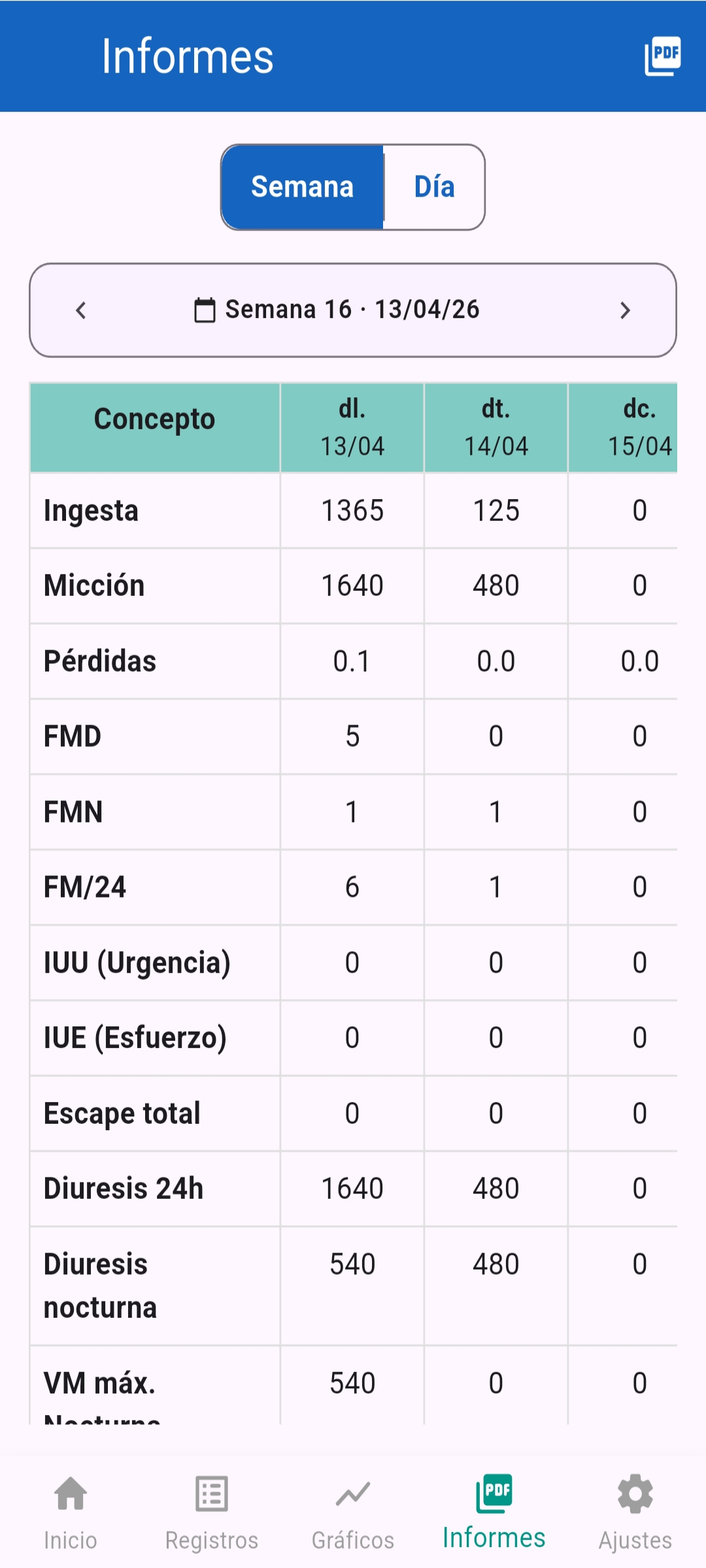
Summaries ready to review or share.
Good to know
- A 250 ml measuring jug is usually enough.
- In the first days, a small 1 kg kitchen scale helps you learn how much your usual glasses and cups hold.
- At least record the pad change when you get up and every change during the day.
- It may feel tedious at first; once your usual measures are set up, each entry is very quick.