

PAC-SALUT module · Bowel health
Bowel diary
Follow your bowel rhythm and changes.
The bowel diary lets you record the rhythm and consistency of bowel movements and symptoms related to digestive health, to describe your progress in a language shared by patient and professional.

It uses the Bristol stool scale, which classifies stools into seven types according to their shape and consistency. The information can be useful to discuss changes in habits, diet, medication or symptoms with your health professional.
What you can record
- Bristol typeTypes 1 to 7, with a single tap.
- Straining, volume and urgencyOptional, to help spot patterns.
- DetailsBlood, mucus, abdominal pain, incomplete emptying, wind…
- Medication and notesAnything you want to discuss at your appointment.
How it works
- 1
Record
Lets you record each bowel movement with the date, time and Bristol scale type. When something is unusual, you can add details such as pain, urgency, straining, blood, mucus or medication.
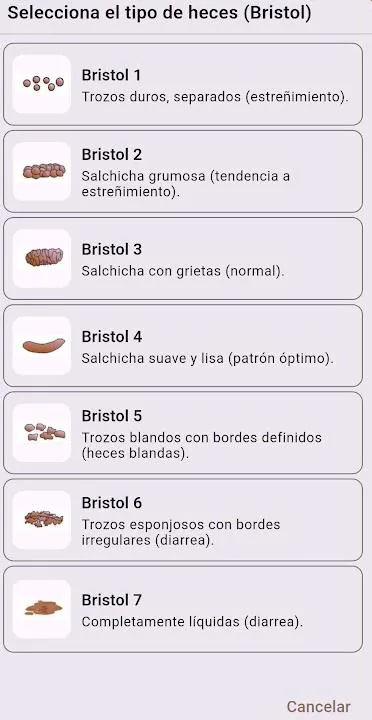
The Bristol type, with a single tap. - 2
See your progress
Charts show your progress by week, month or for the whole period, and help you see changes in frequency and consistency.
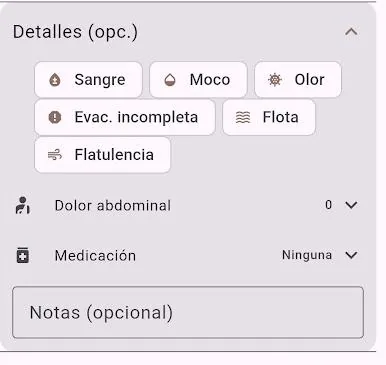
Progress by week or month. - 3
Share
The report summarises your weekly or monthly progress and counts the events recorded. The person chooses which charts to include in the PDF before exporting it.
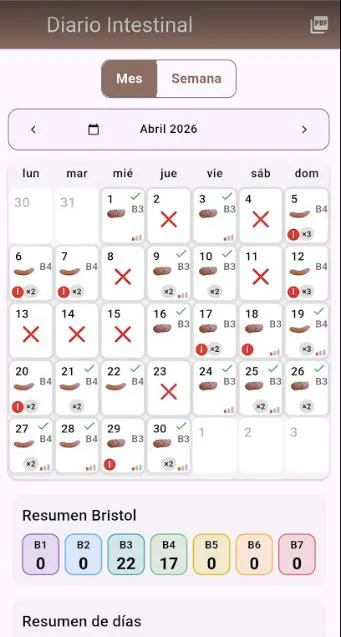
Summary with a count of events.
Good to know
- To start with, recording the Bristol type is enough.
- Add details when there is pain, urgency, diarrhoea or constipation.
- Consistency is more useful than completeness: a simple entry every day is better.